
What the End of Automatic Work Permit Extensions Means for U.S. Employers
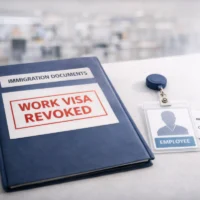
A foreign national who submits a work permit renewal on time could still lose authorization to continue working while U.S. Citizenship and Immigration Services (USCIS) processes the application. For employers, that delay could mean losing an experienced employee for weeks or months, even when the worker remains eligible for renewed authorization.
On October 14, 2026, the Department of Homeland Security (DHS) finalized regulations ending automatic work permit extensions for certain renewal applicants. The restrictions first took effect on October 30, 2025, and the final rule preserves them without modification. For New York businesses that employ foreign nationals, working with a New York business immigration attorney can help address employment authorization concerns before they disrupt business operations.
What DHS Changed in Its Final Work Permit Rule
Under the previous regulations, eligible foreign nationals could receive automatic extensions of their employment authorization documents (EADs) lasting up to 540 days while USCIS processed timely renewal applications. This protection allowed qualifying workers to remain employed during lengthy processing periods without waiting for approval of a new EAD.
That protection ended for most affected renewal applications filed on or after October 30, 2025. Under 8 CFR § 274a.13(e), submitting Form I-765, Application for Employment Authorization, generally no longer extends an expiring work permit unless another legal provision or applicable exception provides continued authorization.
The October 2026 final rule, published at 91 Fed. Reg. 65306, confirms the earlier restrictions without establishing a new filing cutoff. DHS maintains that renewed authorization should follow completed eligibility reviews and security screening. For affected workers, filing on time remains essential, but continued employment now depends on receiving approval before existing authorization expires or having another valid basis for working.
Which Foreign Workers Are Affected
The restrictions affect several categories of foreign nationals employed by U.S. businesses, including eligible H-4 spouses of H-1B visa holders and individuals awaiting employment-based adjustment of status. These workers frequently depend on an approved EAD to remain employed while their underlying immigration applications or family members’ immigration matters proceed.
An H-4 spouse whose renewal application remains pending when the current work permit expires generally loses the ability to continue working unless another authorization applies. Employees awaiting employment-based green cards face similar interruptions when their employment depends on an adjustment-related EAD rather than separate work-authorized immigration status.
Other foreign workers have a different basis for employment authorization. Certain L-2 spouses, for instance, are authorized to work through their valid immigration status, with an appropriately annotated Form I-94 serving as evidence of that authorization. Their right to work continues during valid qualifying status even if a separately issued EAD expires. Employers need to distinguish these situations from those involving workers whose authorization depends on EAD approval.
Which Automatic Work Permit Extensions Still Apply
The final rule preserves qualifying automatic extensions granted under renewal applications filed before October 30, 2025. Workers who satisfied the earlier requirements retain the applicable extension, potentially lasting up to 540 days from the expiration date printed on their EADs, subject to category-specific limitations.
For businesses with employees relying on earlier renewal receipts, the filing date remains significant. A qualifying pre-cutoff Form I-797C receipt notice, together with the required employment documentation, can establish continued authorization during the applicable extension period. A comparable application submitted after the cutoff generally provides no equivalent protection.
Certain statutory extensions also remain available, including those authorized for Temporary Protected Status (TPS) beneficiaries under applicable federal law and Federal Register notices. These protections depend on the particular TPS designation and the employment documentation covered by the extension. The new rule leaves those separate authorities in place.
How Work Permit Delays Disrupt U.S. Employers
Losing an experienced employee during an EAD renewal delay creates serious difficulties for businesses operating with small or specialized workforces. An employee responsible for managing important accounts, overseeing technical projects, or maintaining customer relationships cannot always be replaced on short notice.
Even a temporary interruption creates costs. Existing employees take on additional responsibilities, deadlines become harder to meet, and businesses face uncertainty over when the affected worker can return. Recruiting a replacement becomes particularly complicated when the original employee’s renewal application remains pending and approval could arrive at any time.
DHS acknowledged these potential consequences when finalizing the regulations, including lost productivity, interrupted earnings, and employee turnover costs. The agency nevertheless retained its decision to require completed eligibility screening before granting renewed authorization through the affected application process. Businesses must now account for processing uncertainty that previously could be absorbed through automatic extensions.
Form I-9 Requirements When Work Authorization Expires
Federal law requires employers to verify that employees are authorized to work in the United States. These obligations arise under Section 274A of the Immigration and Nationality Act, 8 U.S.C. § 1324a, and include completing Form I-9 and conducting reverification when required.
The DHS final rule leaves those existing requirements unchanged. What changes is the documentation available to certain employees during renewal processing. An affected worker whose application was filed after October 29, 2025, generally cannot use an expired EAD and renewal receipt as proof of continued authorization without another applicable extension or exception.
When reverification is required, employees retain the right to present any acceptable List A or List C document establishing continued employment authorization. Employers cannot insist on a particular document when another acceptable form of evidence satisfies federal requirements. If an employee’s authorization has expired and no valid alternative exists, the employer cannot permit that individual to continue working until authorization is restored.
Planning for Work Permit Renewals Without Automatic Extensions
The elimination of automatic extensions places greater pressure on renewal timing. USCIS generally recommends submitting EAD renewal applications no more than 180 days before expiration, although applications are not rejected solely because they were filed earlier. An early approval, however, can produce overlapping validity periods because USCIS does not necessarily begin the renewed EAD’s validity when the previous document expires.
This creates a difficult balance for employees facing unpredictable processing times. Filing closer to expiration increases the possibility of an interruption, while substantially earlier filing could reduce the combined period of authorization. Employers also need to account for employees whose immigration classifications or pending applications affect when renewal requests are appropriate.
USCIS permits expedited processing requests in qualifying circumstances, although approval is discretionary and requires supporting documentation. Premium processing remains limited to designated categories, and many affected EAD applicants lack access to that option.
For New York businesses employing foreign nationals, approaching expiration dates deserve attention well before an employee’s final authorized workday. A careful review with a New York business immigration attorney can help clarify which employees face potential authorization gaps and what immigration options remain available when renewal decisions are delayed.
Contact The Law Offices of Meri S. Ponist, P.C.
Work permit delays present significant challenges for employers who depend on foreign national employees to maintain business operations. At The Law Offices of Meri S. Ponist, P.C., we represent businesses and foreign professionals in employment-based immigration matters, providing experienced legal guidance on changing federal requirements and the circumstances affecting each client’s immigration status.
If your business is facing employment authorization delays or uncertainty surrounding EAD renewals, contact The Law Offices of Meri S. Ponist, P.C., to speak with an experienced New York business immigration attorney. We can help address work authorization concerns and navigate immigration requirements that affect your employees and business operations.